There is a particular kind of person this article is written for. Someone who has spent decades with a fishing rod in hand, who knows the particular silence of early morning water, who measures the quality of a day not by productivity or achievement but by the weight of a fish and the quality of the light on the surface of a lake. Someone for whom fishing isn’t a hobby — it’s an identity. And someone who, faced with the mobility challenges that life sometimes delivers, refuses — absolutely refuses — to let those challenges take the rod out of their hand.
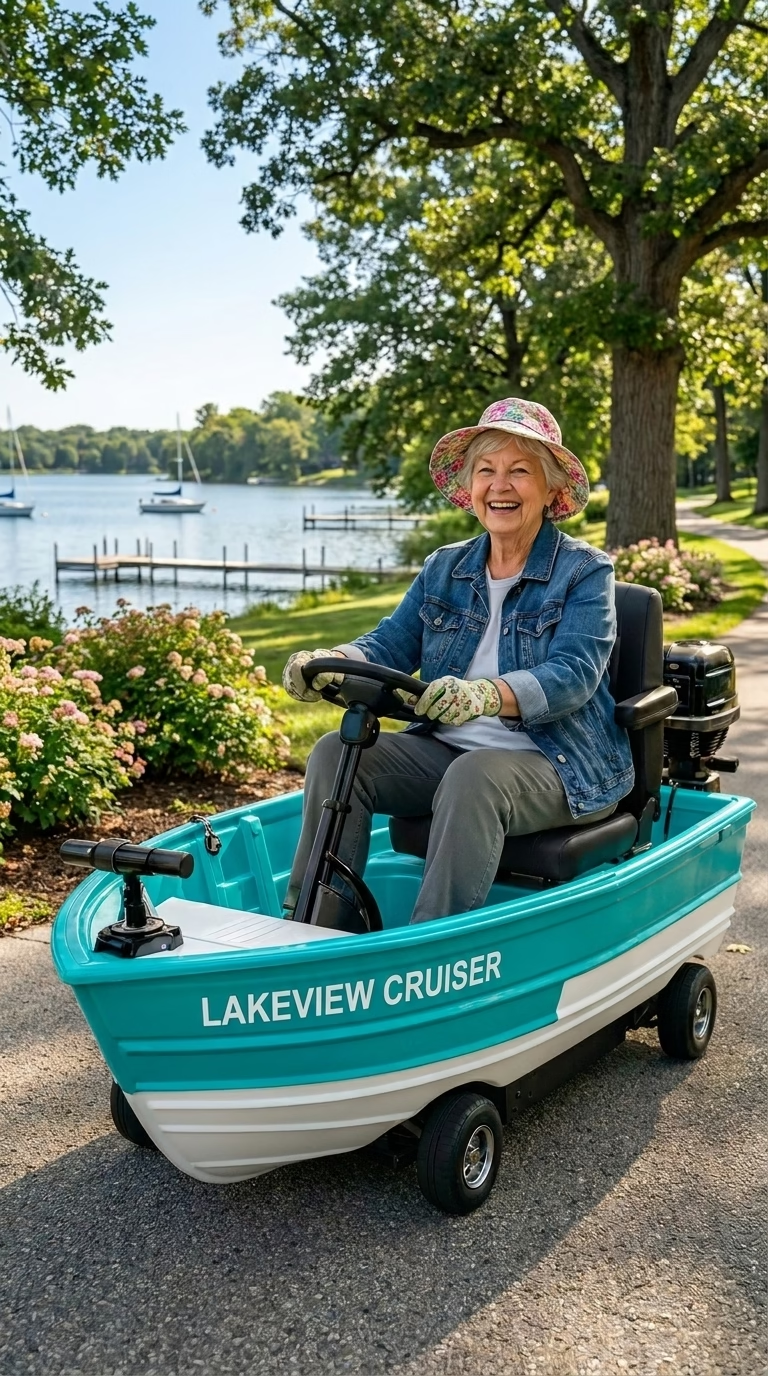
The fishing boat mobility scooter was designed for exactly that person. A mobility scooter styled and themed to evoke the look and spirit of a fishing boat, it transforms a medical necessity into a rolling celebration of the passion that defines its rider. It’s practical, it’s joyful, it’s deeply personal — and it’s one of the most creative mobility products ever brought to market.
What Is a Fishing Boat Mobility Scooter?
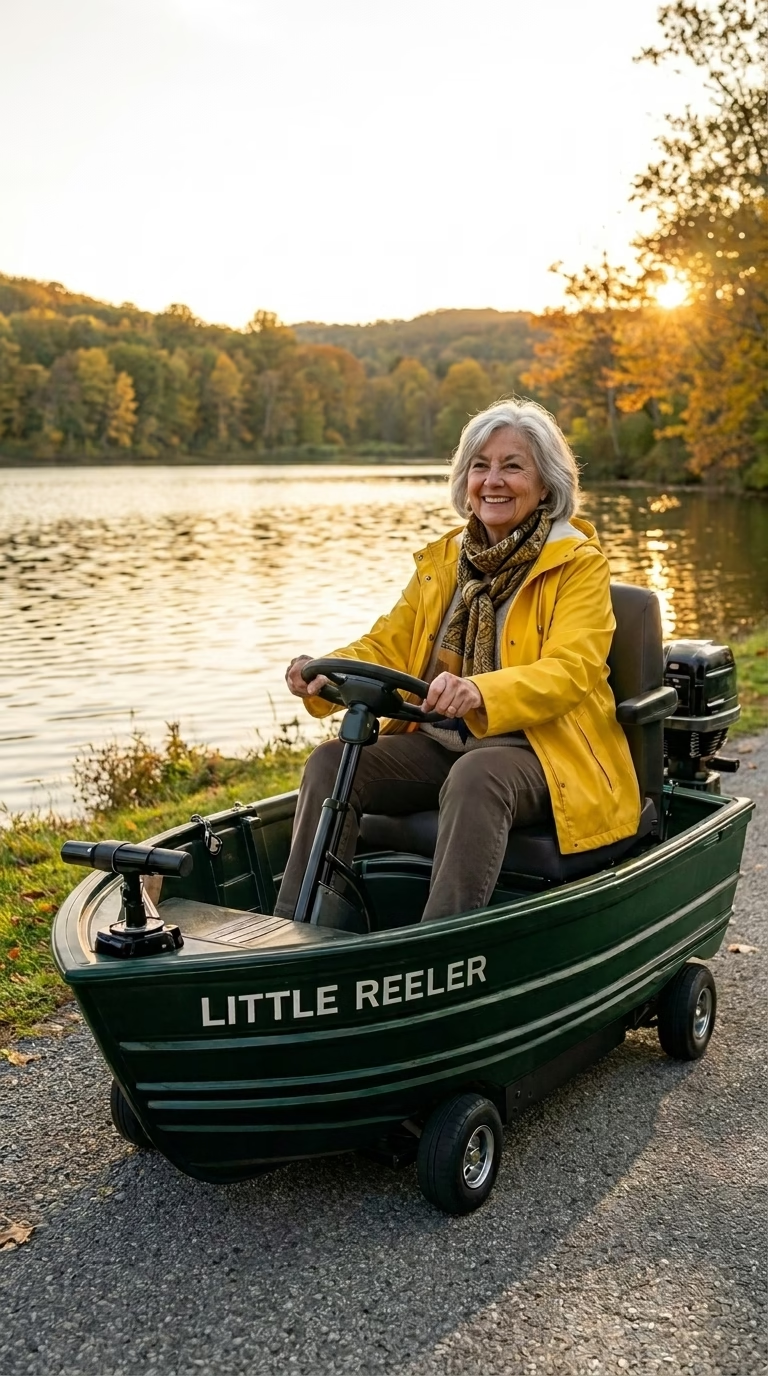
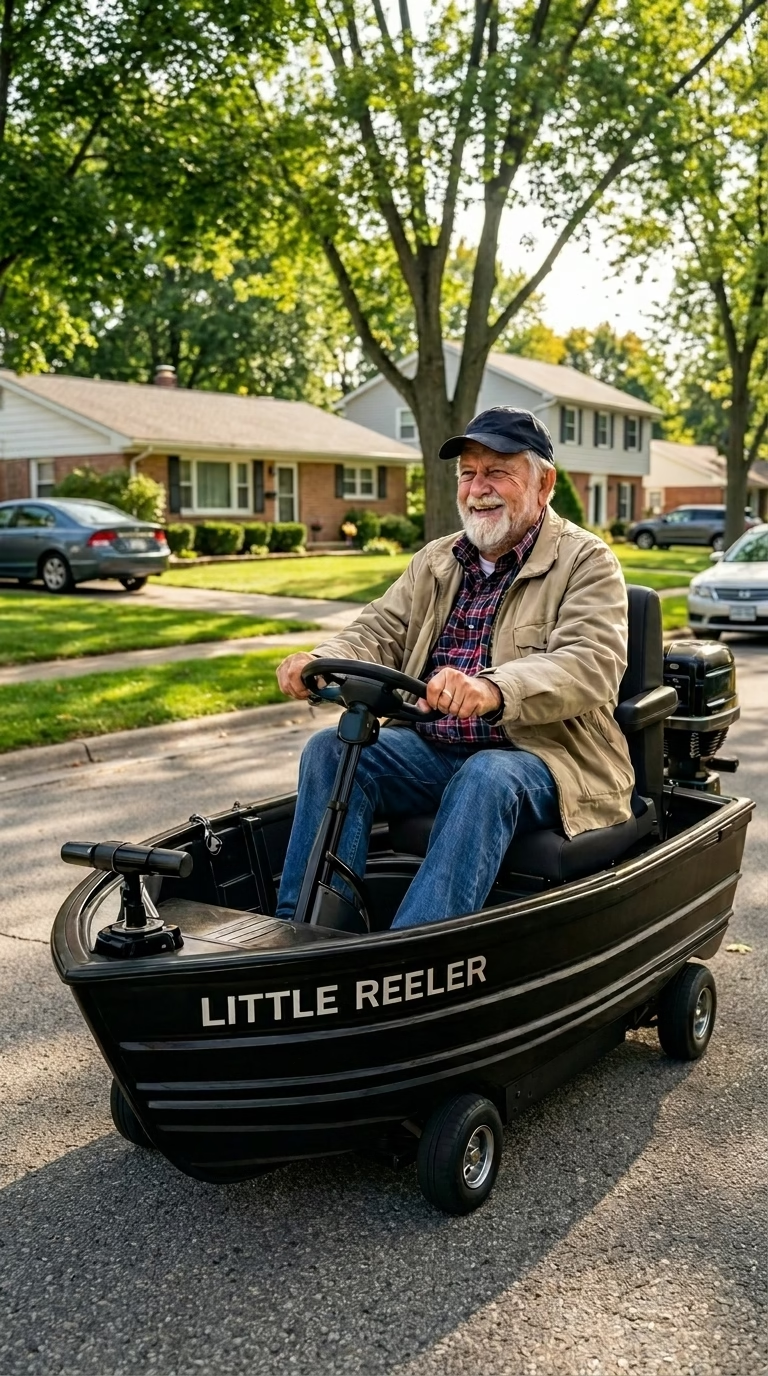
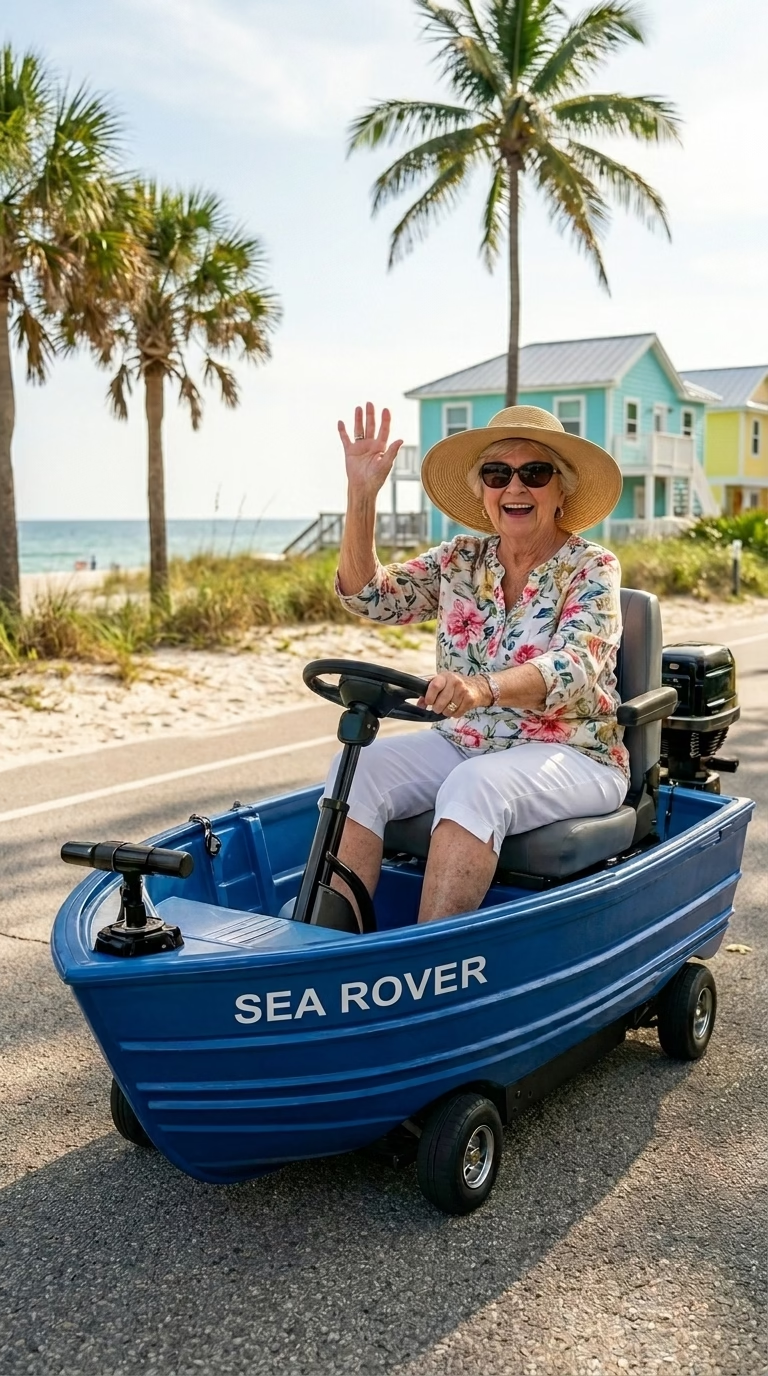
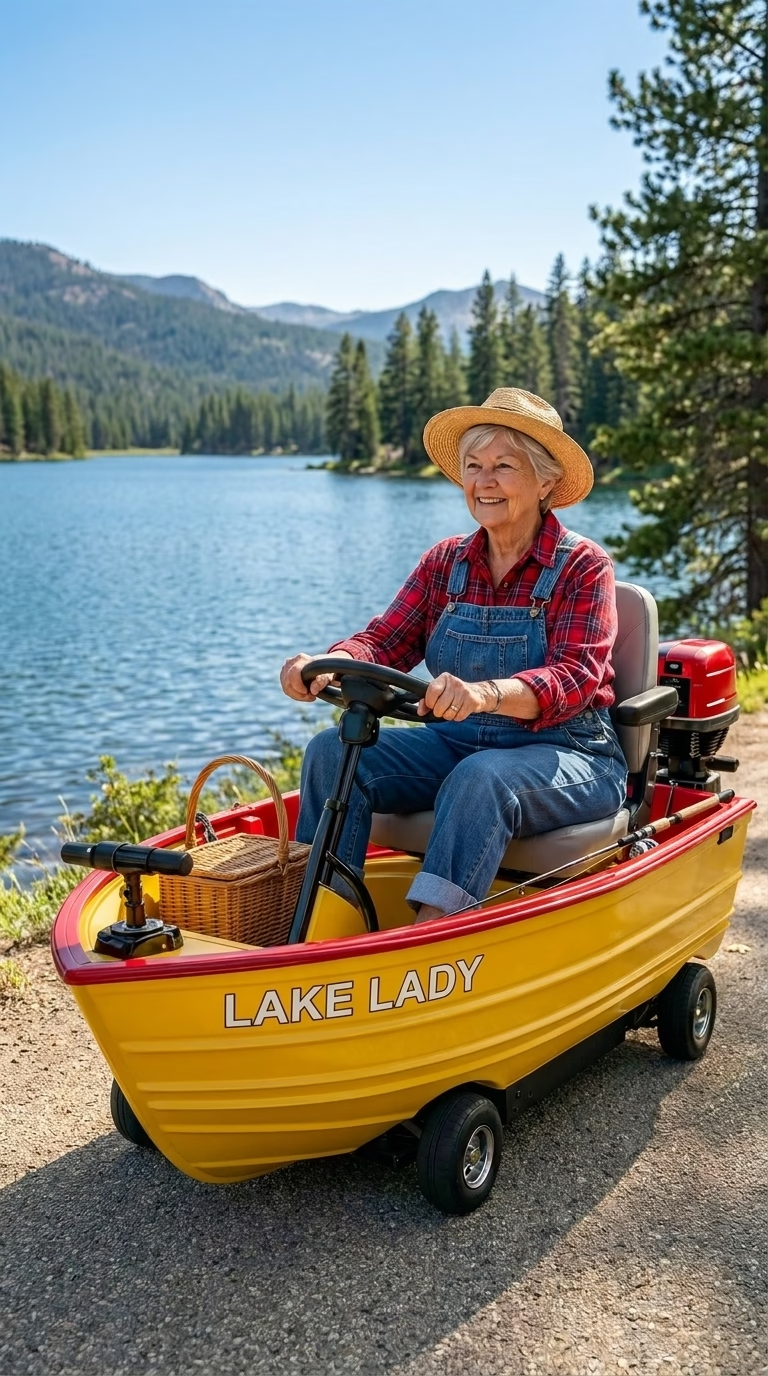
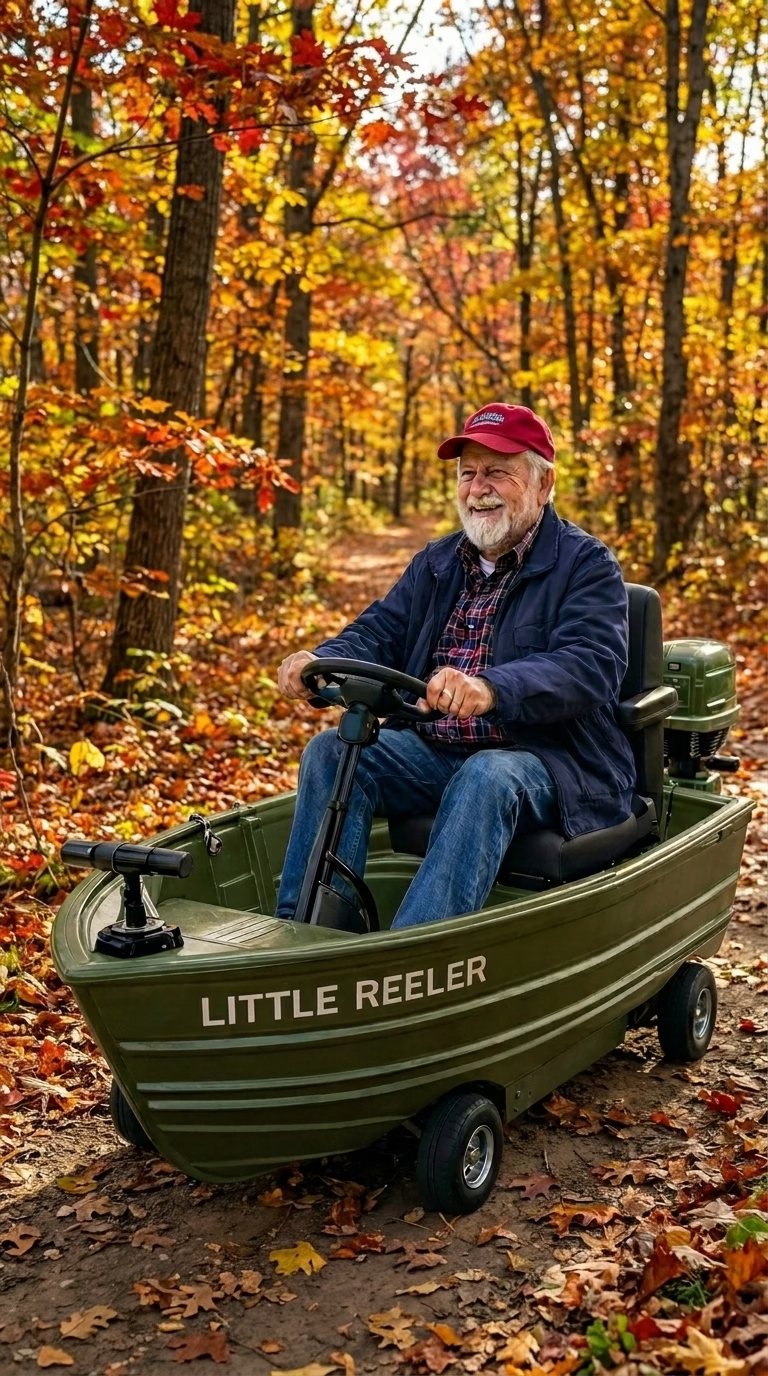
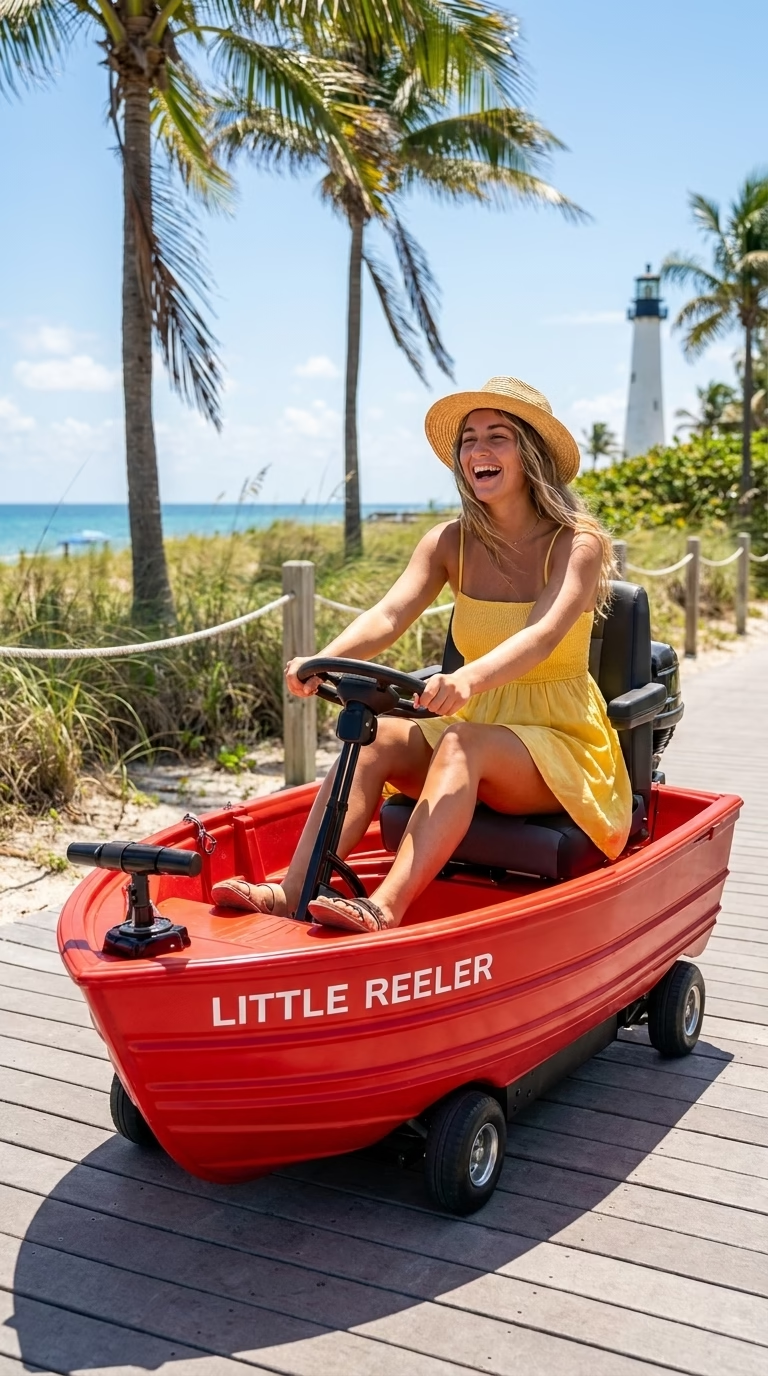
A fishing boat mobility scooter is a novelty mobility scooter designed to resemble a miniature fishing boat or to incorporate fishing-themed styling elements that reflect the rider’s passion for angling. The mobility scooter platform — providing powered, stable transportation for users with limited mobility — is wrapped in the visual language of fishing culture: boat hull styling, fishing rod holder details, nautical color schemes, fish graphics, tackle box-inspired storage, and the general aesthetic of a well-loved fishing vessel.
These products exist across a spectrum of design commitment. At one end are commercially available mobility scooters fitted with fishing-themed accessories and custom bodywork panels that transform the standard scooter silhouette into something that strongly evokes a fishing boat. At the other end are fully custom builds — one-of-a-kind creations where skilled fabricators have constructed genuine fishing boat bodywork around a mobility scooter chassis, complete with working navigation lights, authentic marine-grade fittings, and paint jobs executed to the standard of a real vessel.
The functional core remains consistent across all versions: a battery-powered mobility scooter that provides reliable, comfortable transportation for users who need assistance with movement, wrapped in an aesthetic that transforms necessity into personality.
Why the Fishing Boat Mobility Scooter Matters Beyond the Fun
To appreciate the genuine significance of the fishing boat mobility scooter, it helps to understand what standard mobility aids communicate — and what this one communicates instead.
A conventional mobility scooter signals, clearly and loudly, one primary message: the rider has a mobility limitation. This is not shameful — mobility aids are life-changing tools that restore independence and quality of life for millions of people. But the visual language of standard mobility scooters can feel clinical, impersonal, and disconnected from the rider’s identity. Many people resist adopting mobility aids longer than they should, precisely because they don’t want the scooter to become their defining visual characteristic.
The fishing boat mobility scooter reframes this entirely. Instead of a clinical device that announces limitation, it becomes a personality statement that announces passion. Instead of something the rider reluctantly accepts, it becomes something they genuinely enjoy — and show off. The psychological impact is real and meaningful: riders who feel pride and pleasure in their mobility aid are more likely to use it consistently, maintain more active social lives, and approach their mobility challenges with humor and resilience rather than withdrawal.
For fishing enthusiasts specifically, the fishing boat scooter does something even more powerful: it keeps their identity as an angler visible and central, even when physical limitations have changed how they fish. It says, to everyone who sees it: this person is a fisherman. That has always been true and it always will be.


Who Is the Fishing Boat Mobility Scooter For?
The appeal spans a wider audience than the specific fishing theme might initially suggest:
Lifelong Anglers — The primary and most obvious audience. Men and women who have spent their lives fishing — from childhood with a simple rod to decades of serious angling across rivers, lakes, and coastlines — find in the fishing boat mobility scooter a product that honors their identity while addressing their practical needs. It’s not a compromise. It’s a continuation.
Retired Fishermen and Women — Retirement often coincides with both increased fishing time and emerging mobility challenges. For someone who has finally reached the life stage where fishing every day is possible, a mobility limitation that threatens that freedom is particularly cruel. A fishing boat mobility scooter addresses the mobility challenge while celebrating the fishing passion — a combination that makes the transition to mobility aid use significantly more emotionally acceptable.
Fishing Communities and Clubs — Angling clubs, fishing societies, and waterside communities have discovered the fishing boat mobility scooter as a product that genuinely belongs within their culture. It’s the kind of object that gets photographed at the waterside, shared among members, and celebrated as an expression of the community’s values — the refusal to let anything, including physical limitation, separate a fisherman from the water.
Families Seeking the Perfect Gift — Adult children, grandchildren, and fishing companions searching for a gift for an angler who needs a mobility scooter face the same challenge as every family in this situation: how do you give someone a mobility aid without making it feel clinical, impersonal, or like an acknowledgment of decline? The fishing boat mobility scooter answers this question completely. It transforms a necessary purchase into a thoughtful, humorous, and genuinely meaningful gift that communicates understanding of who the recipient really is.
Content Creators and Fishing Media — The fishing boat mobility scooter has genuine viral potential in the fishing content community. Fishing YouTubers, Instagram anglers, and waterside content creators have discovered that arriving at the waterside in a fishing boat mobility scooter generates the kind of genuine, delighted reaction that makes for compelling content — authentic rather than manufactured, funny rather than forced.
Practical Features: What to Look for in a Fishing Boat Mobility Scooter
Beyond the visual appeal, the fishing boat mobility scooter must perform as a genuine, reliable mobility aid. Here’s what to evaluate:
Range and Battery Life — For anglers who want to reach waterside locations, navigate along riverbanks, or move between fishing spots, range is a critical practical consideration. Look for a scooter with a battery range of at least 15 to 20 miles per charge on a single battery — more for users who plan extended waterside sessions. Verify that the battery range specification is measured under realistic conditions rather than ideal laboratory settings, which consistently overstate real-world performance.
Terrain Capability — Waterside environments are rarely as smooth as shopping center floors. Riverbanks, lakeside paths, gravel tracks, and grass verges are all realistic terrain for a fishing boat mobility scooter. Look for a scooter with pneumatic tires rather than solid foam alternatives — pneumatic tires absorb ground irregularities more effectively and provide meaningfully better traction on loose or uneven surfaces. Ground clearance should be sufficient to navigate the modest obstacles of outdoor waterside environments without grounding.
Stability and Weight Capacity — Fishing involves carrying equipment — rods, tackle boxes, bait containers, nets, and sometimes a catch. A fishing boat mobility scooter needs a weight capacity that accommodates the rider plus a realistic equipment load without compromising stability or performance. Look for a stated weight capacity of at least 120 kilograms for the rider alone, with additional load capacity for equipment verified in the product specifications.
Storage Integration — The fishing-themed styling of a fishing boat mobility scooter provides natural opportunities for integrated storage that a standard scooter doesn’t offer. Fishing rod holders, tackle box compartments, bait bucket mounts, and net attachment points are all features that the fishing boat aesthetic can incorporate in a way that feels authentic rather than tacked-on. Evaluate storage integration specifically — a fishing boat mobility scooter that looks the part but provides no practical fishing equipment storage misses the most important functional opportunity of the entire concept.
Weather Resistance — Fishing happens in all weathers, and a fishing boat mobility scooter needs to handle the damp, cold, and occasionally wet conditions of waterside environments without mechanical compromise. Look for IP-rated weather resistance on the electrical components, sealed battery compartments, and corrosion-resistant hardware throughout. The marine-inspired aesthetic of a fishing boat scooter should be matched by marine-grade practical resilience.
Comfort for Extended Sessions — Fishing involves extended periods of stationary sitting — sometimes for hours. The scooter’s seat should provide genuine comfort for prolonged use: adequate padding, lumbar support, and seat width appropriate for the rider’s build. Some fishing boat mobility scooters incorporate swiveling seats that allow the rider to turn to face the water while fishing — a detail that transforms the scooter from a transport device into a genuine waterside fishing platform.
Using Your Fishing Boat Mobility Scooter at the Waterside
Getting the most from a fishing boat mobility scooter requires thinking about waterside use specifically:
Path Assessment — Before committing to a waterside location, assess the access path for terrain that might challenge the scooter’s capability. Steep riverbanks, very soft ground, and narrow paths with obstacles can all limit access. Identifying suitable locations in advance — and building a repertoire of accessible fishing spots that deliver good results — makes every outing more reliable and enjoyable.
Equipment Organization — The fishing boat styling provides the opportunity to organize fishing equipment in a way that makes waterside use genuinely efficient. Dedicate specific storage locations to specific equipment categories — rods in the rod holders, tackle in the box compartments, bait within arm’s reach of the fishing position. Good organization reduces the effort of setting up and packing down at the waterside, preserving energy for the fishing itself.
Weather Preparation — Waterside environments are exposed. Wind chill, rain, and temperature drops affect comfort significantly during extended stationary sessions. Prepare with appropriate waterproof and thermal clothing, and consider a waterproof cover for the scooter’s control panel and battery compartment during rain. A small fishing umbrella mounted to the scooter’s frame provides meaningful weather protection without compromising mobility.
The Bottom Line
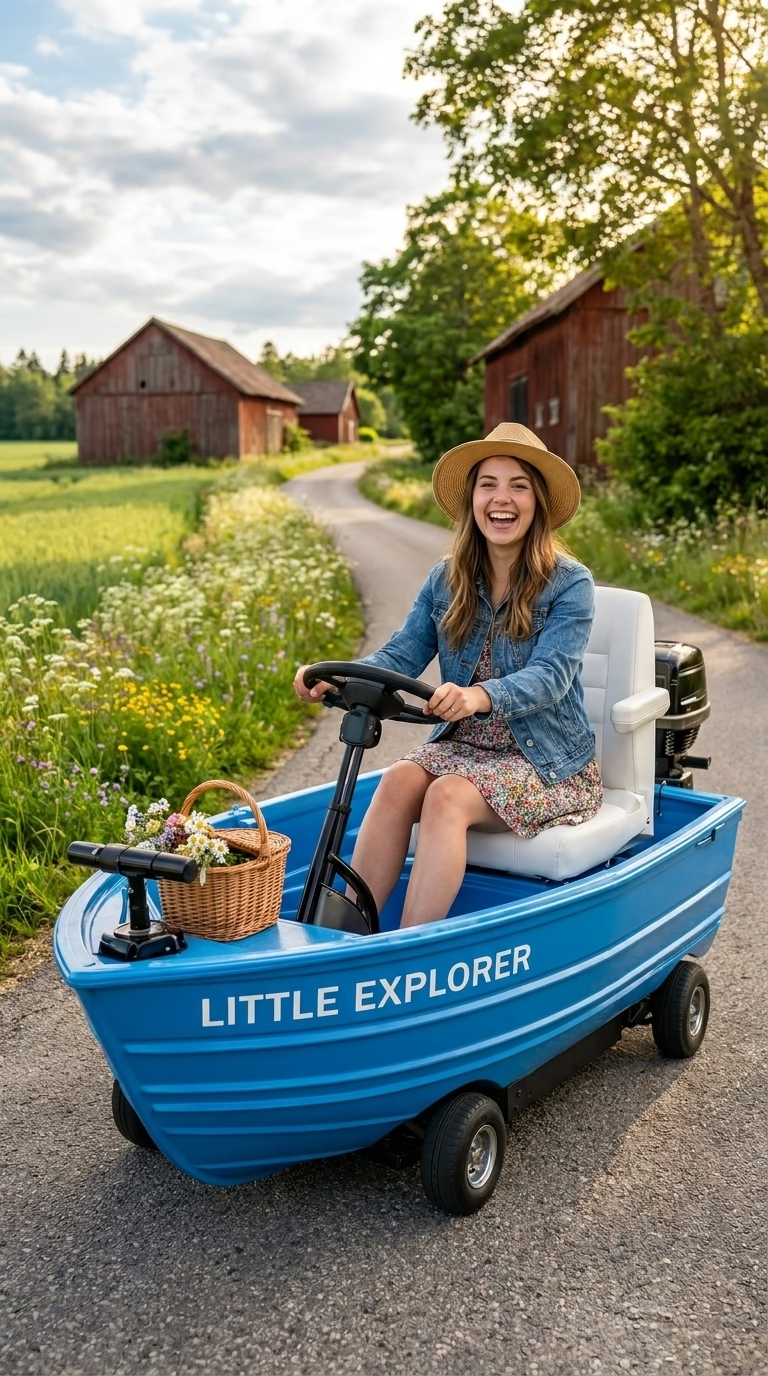
The fishing boat mobility scooter is proof that necessity and joy are not mutually exclusive — that a mobility aid can be as expressive, as personal, and as genuinely wonderful as any other object a person chooses to surround themselves with.
For the angler who needs a scooter but refuses to let that need define them, it’s the perfect solution. It keeps the fishing identity front and center, addresses the practical mobility challenge with genuine competence, and delivers a daily dose of the humor, personality, and passion that make life worth living — whether you’re on the water or rolling toward it.
Cast off. The fish are waiting.